
Thriving Together: Impact, Innovation, and Inclusion in Business and Management

I spent the best part of a week at Royal Holloway for the British Academy of Management’s (BAM) 2026 Annual Conference.
It was the Academy’s 40th anniversary year; there were around a thousand delegates in the room and more than 70 countries represented, and the theme was Thriving Together: Impact, Innovation and Inclusion in Business and Management.

I went to several sessions across the three days, however, six of them are stayed with me, and they are the ones I want to write about.

They ranged from artificial intelligence policy to insulin injections in care homes, and I did not expect them to have much in common. Howver, by the end of the week I believed they did and I will discuss this below.

Forty years on
The opening ceremony did the thing anniversaries do, and did it well.
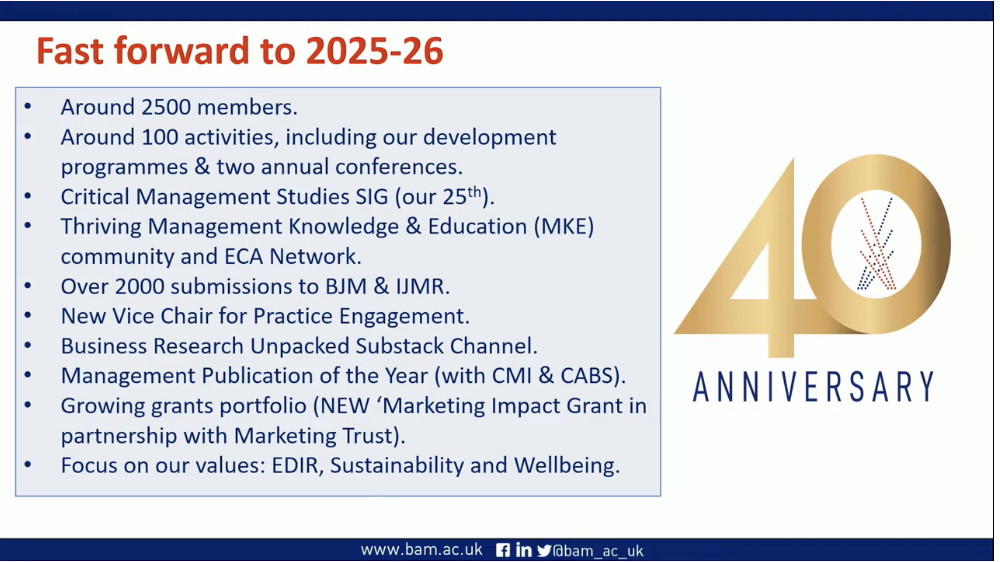
Professor Emma Parry, the Academy’s chair, took us back to 1986: the Chernobyl disaster, the Challenger disaster, England crashing out of the World Cup due to the "Hand of God." The Academy has grown from a handful of academics to around 2,500 members and 25 special interest groups (SIGs), and this year’s conference had roughly 1,000 people in the room, up from about 850 last year.

Professor Parry also spent time on wellbeing, which has moved from a side topic to a stated strategic pillar, with an honest acknowledgement that conditions in UK institutions are currently difficult. The free monthly webinar series is open to non-members.
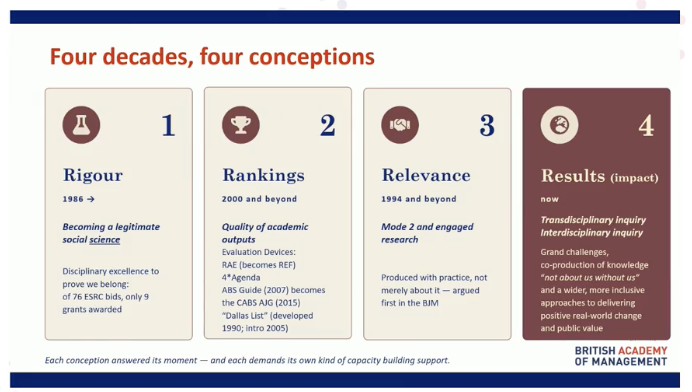
What held my attention was Professor Katy Mason’s retrospective. She walked us through four decades of the field arguing for its own legitimacy:
- first that business and management was a proper social science,
- the journal rankings and the four-star agenda,
- the relevance question and Mode 2 research, and
- finally impact.
Her framing of that last one was pointed.
“We didn’t just respond to the impact agenda. We argued for it and helped shape it. This is our agenda, and everybody in this room should feel they have agency in their academy.”
Thriving Together
The first keynote panel brought together Prof Lynda Gratton - London Business School, Janine Chamberlin - LinkedIn, Steve Armitage - Head of Innovation - Digital Transformation at Heathrow Airport, Daniel Neyland - Bristol Digital Futures Institute, and, joining online from Lord Tim Clement-Jones CBE - Lords Spokesman on AI and Digital.
Lord Clement-Jones CBE placed artificial intelligence in a line of industrial transitions rather than treating it as unprecedented.
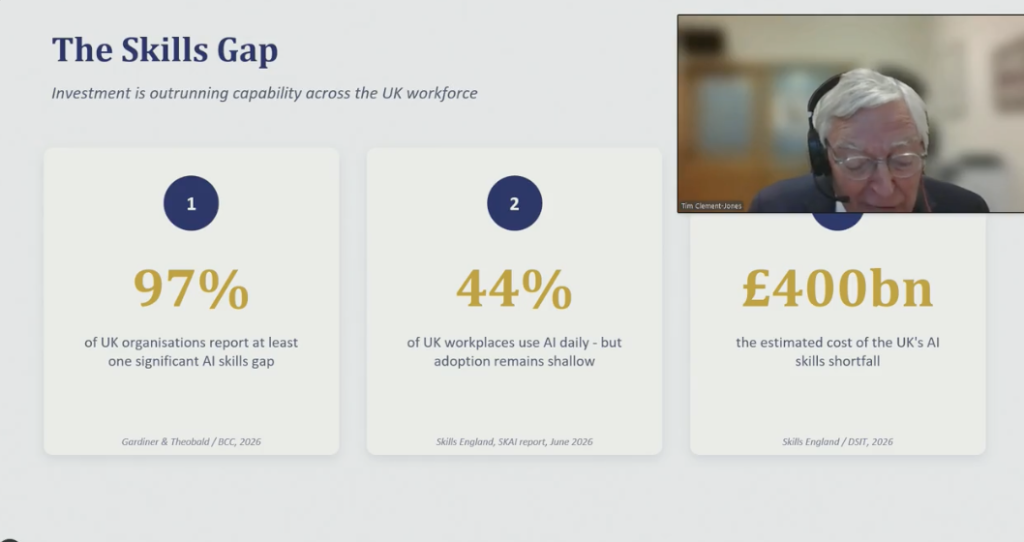
“Every generation faces questions that determine who has power over whom, in life and especially in the workplace, and every generation has to decide how much of that power it is willing to leave ungoverned. That was true when the cotton mill and the power loom were introduced, and it is still true in this age of AI.”
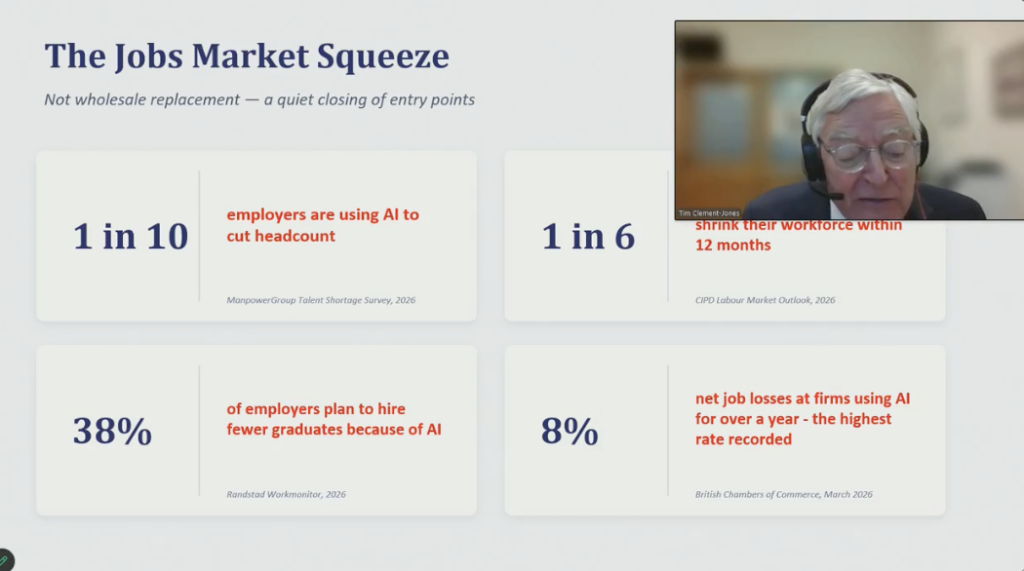
His substantive point was that the benefit will not arrive on its own. It will be realised, he said, by organisations that treat skills investment and governance as the same project: training people properly, and building systems that people and regulators actually trust.
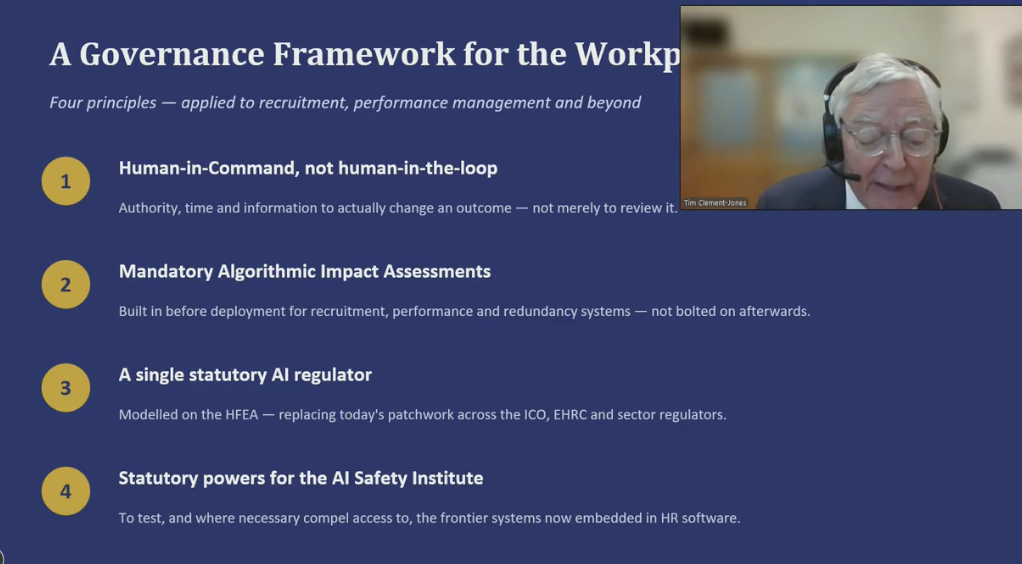
He then told a room of business and management academics what he wanted from them, and it was refreshingly specific. Not another report on whether AI is arriving and what it will do to productivity and jobs, but the evidence base that tells employers what meaningful human involvement actually looks like inside a live recruitment pipeline, what a workable algorithmic impact assessment actually changes, and how you retrain a 55-year-old for a role that did not exist two years ago.
My takeaway. Skills and governance are almost always run as separate workstreams, owned by different functions, on different budgets and different timetables. Treating them as one project is a claim about how an organisation is structured, not just about policy. It implies a single owner and a shared budget for work that most employers currently split between HR and compliance.
EDI in UK Health Care
A symposium on EDI in UK healthcare, funded by the National Institute for Health and Care Research, ran three papers. Separately, they were interesting. Together they described something closer to a system.
- The 1st reviewed the literature on bullying of migrant staff in UK healthcare.
- The finding that stayed with me is that while the general bullying literature finds work-related bullying more prevalent, research on migrants finds the reverse: they are predominantly targeted for who they are rather than for what they can do. The presenter also made a case for taking bystanders seriously, on the basis that if 20% of people in an organisation are bullied, as many as 80% may have witnessed it. And she reframed the question that HR departments usually ask. Instead of asking why people do not speak up, ask what makes speaking up unsafe. I asked about the direction of the bullying, since my own research is entirely on upward bullying. The literature is dominated by downward bullying, because migrants typically start in lower-graded roles. Horizontal bullying is well documented. But upward bullying is almost absent, and migrant managers and supervisors are reporting exactly the pattern I study: not being listened to, being spoken to disrespectfully, and their authority not being respected in the position.
- The 2nd paper followed Filipino nurses in the NHS and asked what sustains silence.
- Its argument is that the voice literature locates the costs of speaking up inside the workplace, and for this group that is simply wrong. The costs are calculated outside it. Some participants send up to half their monthly salary home. Speaking up risks not being able to provide, which is a different order of magnitude of cost than losing a job. Voice grew with tenure, secure visa status and citizenship, and with a senior colleague willing to guide new arrivals.
- The 3rd paper looked at what NHS trusts do with the data they collect, through the staff survey, the Workforce Race Equality Standard and the Workforce Disability Equality Standard.
- The authors identify four responses: closing, where analysis is treated as the intervention; disappearing lived experience through aggregation; stalling, where everyone is responsible, and nobody is accountable; and spinning, where the data are used selectively to sustain an existing story. Their argument is that asking people to disclose sensitive information and then doing nothing with it constitutes organisational betrayal. I spent years in HR at the Ministry of Defence watching Civil Service People Survey results handled in precisely the same way, and institutional betrayal is a concept I use in my own work. What I had not expected was to hear a team arrive at it inductively, from the data, rather than applying it.
My takeaway. Read together the three papers describe a closed loop. It is unsafe to speak, so the formal channel becomes the annual survey, the survey produces no change, and the silence is confirmed as entirely rational. Any employer that runs an engagement survey should sit with that sequence for a minute.
Reimagining Inclusive Education in the Age of AI: Who Thrives and How?
The second keynote panel asked who is enabled to thrive as AI becomes embedded in education.
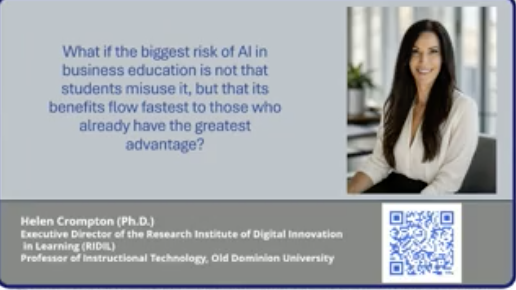
Prof Helen Crompton, Old Dominion University, Virginia opened by arguing that the obsession with cheating hides a larger problem:
- the benefits of AI are flowing fastest to those who already hold the greatest advantage.
Institutional bans, she pointed out, serve students who have access at home perfectly well and disadvantage the ones who depend on the institution.
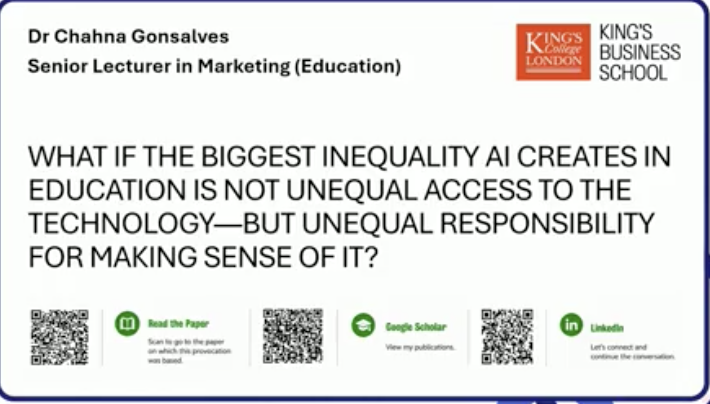
Dr Chahna Gonsalves, King’s College, London, gave the contribution I have thought about most since. She cited the Higher Education Policy Institute’s March 2026 survey:
- 95% of students use generative AI;
- 94% use it for assessed work; and
- 38% say their institution provides them with the tools.
Her question was whether the biggest inequality AI creates is really unequal access, or unequal responsibility for making sense of it.
Because the rules are inconsistent across a university and nobody reconciles them, somebody has to work out what constitutes appropriate use, retain the drafts, disclose the assistance, and prove the work is theirs. That somebody is the student, who has the least authority over the systems creating the problem. She calls it responsibility without authority.
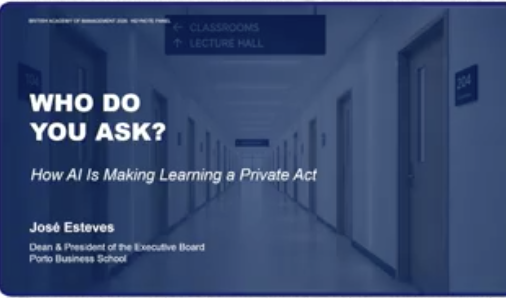
Prof Jose Esteves, Porto Business School, closed by pointing out that everyone else on the panel had framed learning as something that happens to an individual. His argument is that universities are carefully redesigning the formal layer, meaning curriculum, policy, guidance and assessment, while accidentally dismantling the informal one: the corridor, the study group, the message at eleven at night. Informal learning was always free. Once it has to be rebuilt deliberately, it becomes a premium feature.
My takeaway. Responsibility without authority is not an AI problem. It is what happens whenever guidance is inconsistent across an organisation and nobody reconciles it. The burden of working out the rules lands on whoever has the least standing to object, and that applies to grievance and conduct policy just as readily as to assessment.
Gender & Leadership
Carol Gill, Isabel Metz and Jody Evans of Melbourne Business School presented work on how women’s leadership identity develops, drawing on 60 interviews across Australia and the Nordics.
https://bam.xcdacademy.com/index.cfm/item/65400
They build on the claiming-and-granting framework: you claim leadership by asking for a promotion or a development opportunity, and someone grants it or withholds it. Women, the paper argues, do the claiming. There is not much granting.
Their model has three phases.
- Identity emerges before working life, in family, school, sport and first jobs.
- It erodes on entry to organisations, in everyday moments where leadership is questioned.
- And for some it is restored through developmental relationships.
Two things are worth repeating.
- The first is that the emerging finding puts paid to the ambition argument: these women considered themselves leaders and had aspirations long before they arrived. Whatever is going wrong is not happening in their heads before they get there.
- The second is the contribution the authors term “retrospective granting.” The literature treats granting as forward-looking. What they found was mentors granting backwards: telling a woman that what she had already been doing for years was leadership, and in doing so reinterpreting a whole history of ungranted claims.
My takeaway. The repair worked because it came from outside. External mentors were effective precisely because they had no stake in the organisation that caused the damage. That is an uncomfortable finding for anyone designing an internal mentoring scheme, and the paper did not quite resolve it.
Job quality in adult social care work: exploring gender and job quality models
The last session I want to mention was a study by Carol Atkinson and Claire Evans at Manchester Metropolitan, with Kirsty Marshall at Salford and William Whittaker at Liverpool.
https://bam.xcdacademy.com/index.cfm/item/65401
It is a realist evaluation of delegated healthcare activities in adult social care across Greater Manchester, again funded by the National Institute for Health and Care Research.
District nurses are delegating clinical tasks, including insulin administration, to frontline care workers. The structural oddity is that this crosses a boundary: a registered public-sector professional delegating to an unregistered worker employed by a private provider, because over 80% of adult social care is delivered privately.
Asked what counts as a "delegated task," the presenter explained that there is a deliberate reluctance to publish a list, and that the working test is whether a family member could do it.
The findings are nuanced and worth reading in full. Care workers welcomed the training and took real pride in the new skills. They gained a voice and were listened to by paramedics and GPs who had previously looked down on the role, because they know the people they support better than a visiting nurse does. Several said their workday improved because they no longer had to hold a resident’s meal until a district nurse arrived.
And there was no pay increase, no promotion route, and no prospect of either. These are people administering insulin, where an error is a never event, most of them on or around the National Living Wage. They knew it, and there was a clear sense of grievance.
For context, Skills for Care reports around 1.6 million filled posts in adult social care in England, 111,000 vacancies, an annual turnover of 23.1%, and a workforce that is 78% women. The authors argue that the assumption that caring is natural for women allows responsibility to be added without reward and without anyone facing consequences.
My takeaway. The finding with the most force is the one that closed the paper rather than opening it: a substantial number of care workers simply refused, explicitly on pay. That turns a fairness argument into a delivery risk, which is the register policymakers actually respond to. And it is a warning to any employer adding material responsibility to a role without a pay review, on the assumption that committed people will not object.
System-Sustained Sabotage: A Phenomenological Inquiry into Upward Bullying and the Paralysis of Managerial Performance Frameworks
I presented a developmental paper of my own, as part of the Performance Management track.
My research is on Upward Workplace Bullying (UWB). It asks what happens when the processes that exist to manage performance and resolve grievances are turned around and used by subordinates against the senior managers who are supposed to be operating them. It is not a rare event, and it is very poorly served by the literature, which overwhelmingly assumes that Workplace Bullying (WB) travels downward.
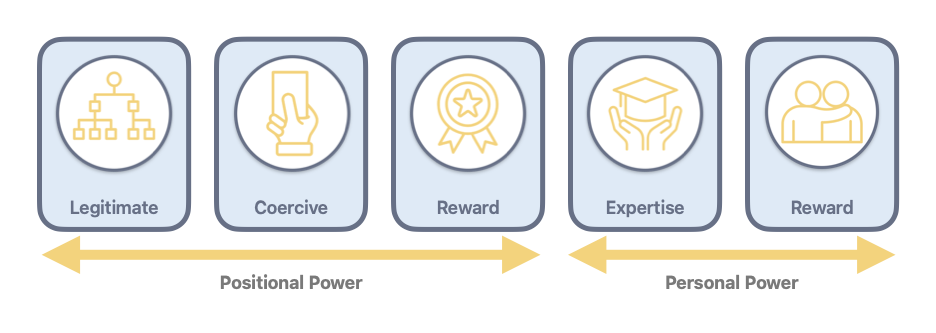
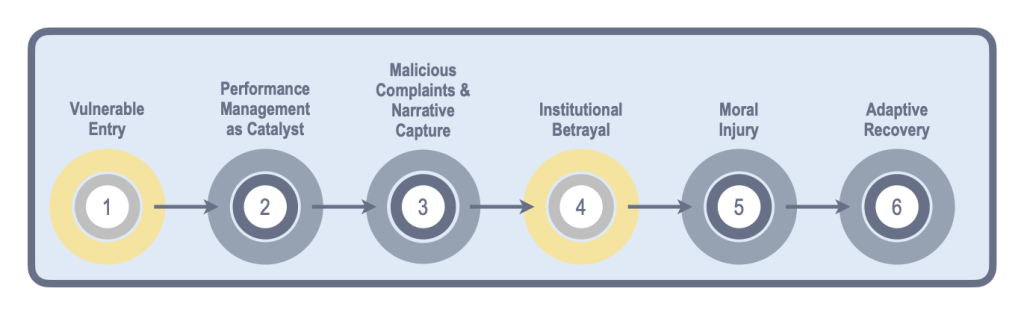
The study uses Interpretative Phenomenological Analysis (IPA) of the lived experience of 12 senior managers in the public sector. IPA suits it, because what I am interested in is not how often this happens but what it does to a person who cannot use the procedure to defend themselves because the procedure is the thing being used against them.
Using IPA enabled me to develop 6 Group Experiential Themes (GETs) which helped describe and explain the lived experiences of the 12 senior managers.
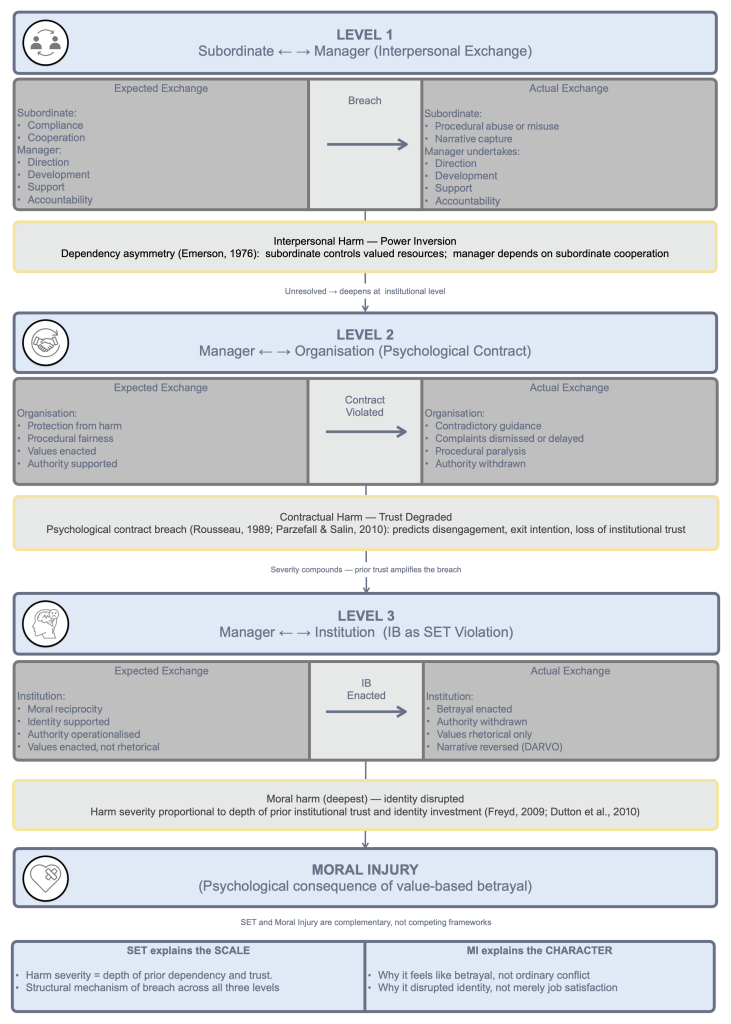
My contribution is a framework I have called the Triple Exchange Breach. The argument is that UWB produces harm of the severity people describe because reciprocity fails at 3 levels at the same time.
- There is the manager’s psychological contract with the organisation that appointed them.
- There is the interpersonal exchange between subordinate and manager, which is social exchange theory.
- And there is the individual’s relationship with the institution itself, which is where institutional betrayal sits.
The three of them failing at once is a different thing, and that is what the framework is for.
My research has two other contributions:
- an extension of institutional betrayal theory to cover what I would describe as Institutional DARVO, where an organisation reverses the roles of victim and offender through its own procedures, and
- a moral injury subtype I have named "betrayal for virtue," for the harm done to people who are punished for doing the right thing.
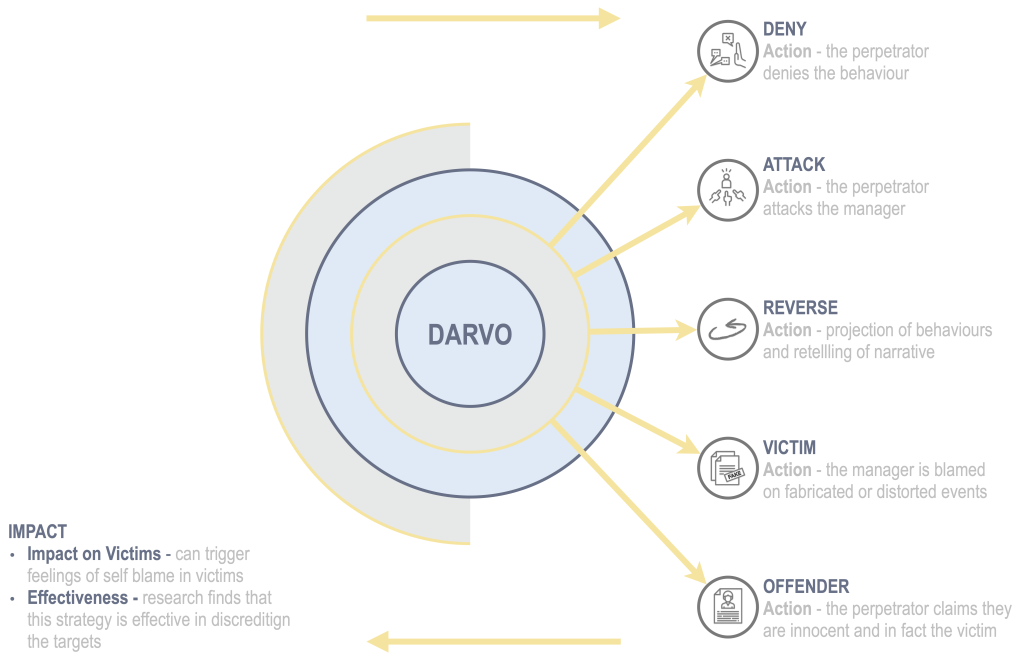
That last point is the discipline of this kind of work. The subject matter has an inherent advocacy orientation, because the people in the study were harmed and the harm was avoidable. The task is to keep the critical edge while being straight about what the evidence will and will not carry.
What connected them
I went to sessions on AI policy, on nurses, on women in leadership, on students and on care workers. They kept describing the same fault from different directions.
In every one of them there was a gap between the person carrying a responsibility and/or accountability and the person holding the authority to do anything about it. Students working out rules that universities have not settled. Care workers taking on clinical risk without a pay review. Nurses whose only formal channel is a survey that changes nothing. Women whose claims to leadership are not granted, and migrant managers whose granted authority is not respected.
That gap relates to my research - I did not expect to find it in six sessions, and I did not expect the people describing it to be working in fields so far apart that none of them were citing each other.
Next year’s conference is at Warwick Business School (WBS), where the first one was held, from 6 September 2027.